
Pick a language and start learning!





Verb conjugation patterns Exercises in German language

Verb conjugation is a fundamental aspect of mastering the German language, as it transforms the meaning of verbs based on tense, mood, and voice. Unlike English, German verbs undergo more complex changes, reflecting not only the time of action but also the person and number of the subject. This can initially seem daunting, but understanding the patterns and rules can significantly simplify the learning process. Regular verbs in German follow consistent conjugation patterns, while irregular verbs often require memorization of their unique forms.
To effectively navigate these conjugation patterns, it's essential to start with the present tense, which serves as the foundation for other tenses. In German, regular verbs in the present tense are conjugated by removing the infinitive ending (-en or -n) and adding the appropriate suffixes for each subject pronoun. Irregular verbs, however, may experience vowel changes or other alterations that deviate from regular patterns. Through a series of structured exercises and practice scenarios, learners can become adept at recognizing and applying these conjugations, paving the way for more advanced grammatical structures and fluent communication.
Exercise 1
<p>1. Ich *gehe* zum Supermarkt (verb for movement).</p>
<p>2. Sie *schreibt* einen Brief an ihre Freundin (verb for writing).</p>
<p>3. Wir *sehen* heute Abend einen Film (verb for watching).</p>
<p>4. Er *isst* ein Sandwich zum Mittagessen (verb for eating).</p>
<p>5. Ihr *spielt* Fußball im Park (verb for playing).</p>
<p>6. Ich *lese* ein interessantes Buch (verb for reading).</p>
<p>7. Sie *trinkt* einen Kaffee im Café (verb for drinking).</p>
<p>8. Du *fährst* mit dem Fahrrad zur Arbeit (verb for riding).</p>
<p>9. Wir *machen* eine Reise nach Berlin (verb for doing).</p>
<p>10. Er *schläft* bis spät in die Nacht (verb for sleeping).</p>
Exercise 2
<p>1. Er *geht* jeden Tag zur Schule (verb for "to go").</p>
<p>2. Wir *lesen* ein interessantes Buch (verb for "to read").</p>
<p>3. Ihr *spielt* Fußball nach der Schule (verb for "to play").</p>
<p>4. Sie *isst* gern Schokolade (verb for "to eat").</p>
<p>5. Ich *schreibe* einen Brief an meinen Freund (verb for "to write").</p>
<p>6. Du *fährst* mit dem Fahrrad zur Arbeit (verb for "to ride").</p>
<p>7. Sie *singen* im Chor (verb for "to sing").</p>
<p>8. Er *arbeitet* bei einer großen Firma (verb for "to work").</p>
<p>9. Wir *trinken* Kaffee am Morgen (verb for "to drink").</p>
<p>10. Ihr *kocht* das Abendessen jeden Abend (verb for "to cook").</p>
Exercise 3
<p>1. Er *geht* zur Schule (verb for 'to go').</p>
<p>2. Wir *spielen* Fußball im Park (verb for 'to play').</p>
<p>3. Sie *liest* ein Buch im Garten (verb for 'to read').</p>
<p>4. Ihr *esst* zu Abend um sechs Uhr (verb for 'to eat', plural 'you').</p>
<p>5. Ich *schreibe* einen Brief an meinen Freund (verb for 'to write').</p>
<p>6. Du *kaufst* Brot beim Bäcker (verb for 'to buy', singular 'you').</p>
<p>7. Er *fährt* mit dem Fahrrad zur Arbeit (verb for 'to drive/ride').</p>
<p>8. Wir *laufen* jeden Morgen im Park (verb for 'to run').</p>
<p>9. Sie *schwimmen* im See im Sommer (verb for 'to swim', plural 'they').</p>
<p>10. Ich *höre* Musik, wenn ich arbeite (verb for 'to listen').</p>
Enhance Your Language Skills with AI
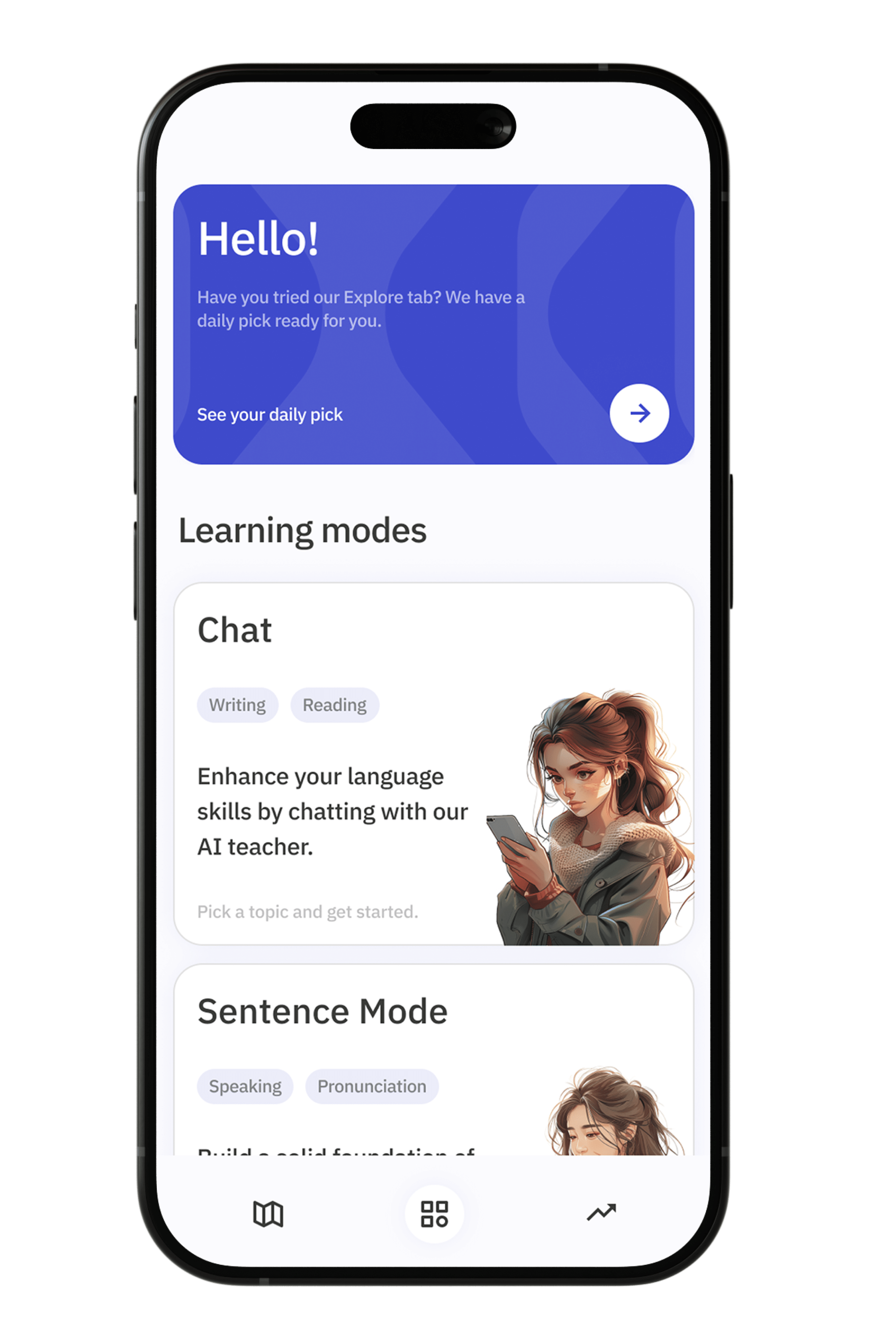
Talkpal is an AI-powered language teacher. Learn 57+ languages 5x faster with innovative technology.